

.webp)
⏱️ 2-minute read
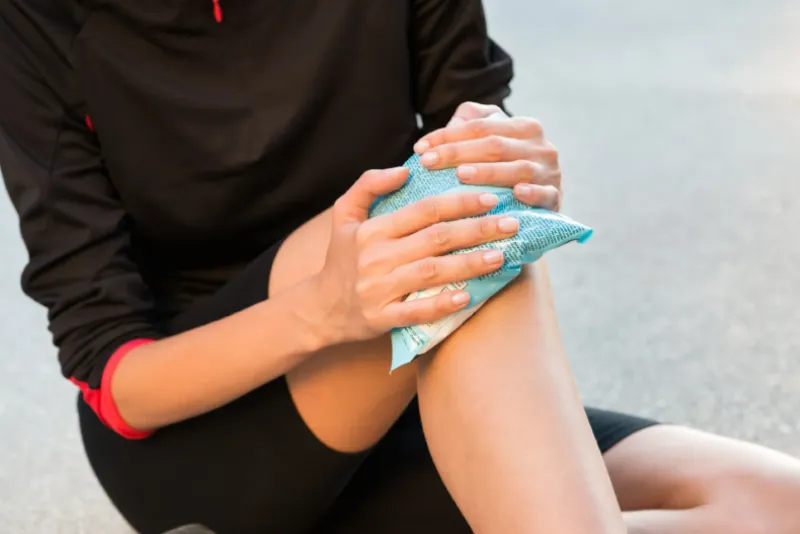
You don’t realise how much you rely on your knees until one of them decides to show pain. Suddenly, climbing the stairs feels like climbing Mount Kinabalu, and sitting cross-legged on the floor? Forget it.
Knee injuries happen all the time, whether from sports, a trip or fall, or even something as innocent as standing up too quickly. The good news is, there are simple things you can try at home before seeing a doctor.
Here are five remedies you can try, with clear timeframes to guide you.

⏳ 2–3 days of taking it easy
Your knee needs a break to calm down inflammation. For the first few days, avoid activities that put pressure on the joint such as running, squatting, or carrying heavy loads. Gentle walking is fine, but always listen to your body. Resting gives the tissues a chance to repair before you safely return to activity.
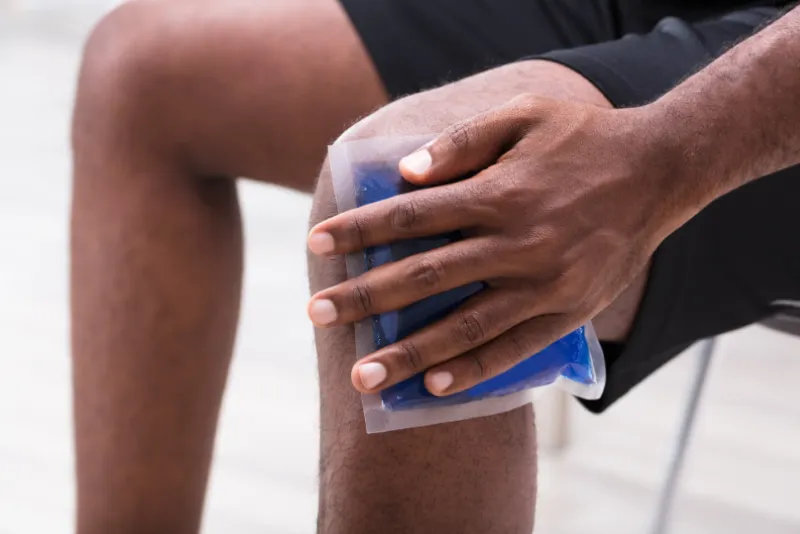
⏳ 15–20 minutes, 2–3 times a day
Cold therapy reduces swelling by narrowing blood vessels and numbing the sore area. Wrap an ice pack or frozen peas in a towel, then apply it for short intervals. Do it for 10 mins intermittently as prolonged ice compression can irritate the skin. Regular icing in the first 48–72 hours can make a real difference in recovery.
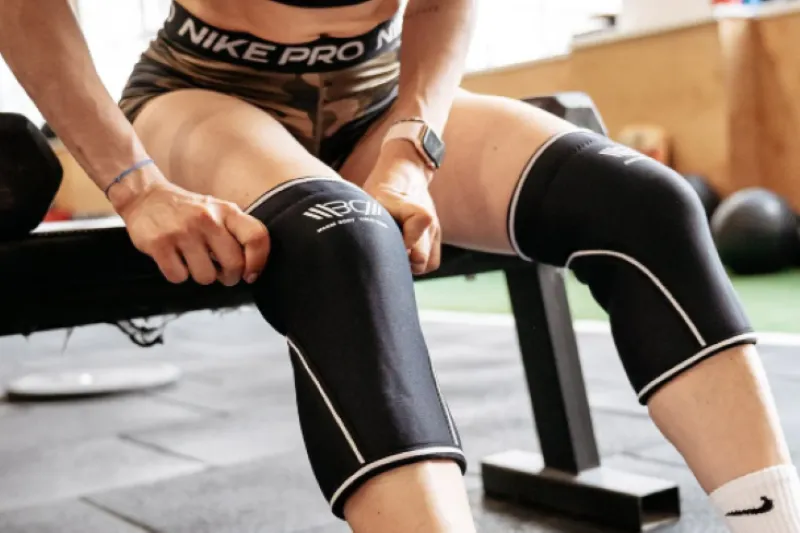
⏳ During the day, up to a week
A knee sleeve or elastic bandage offers two key benefits: it supports the joint so you feel steadier when moving, and it limits swelling by applying gentle pressure. It should feel snug but never cut off circulation. If your toes feel numb, loosen it immediately.
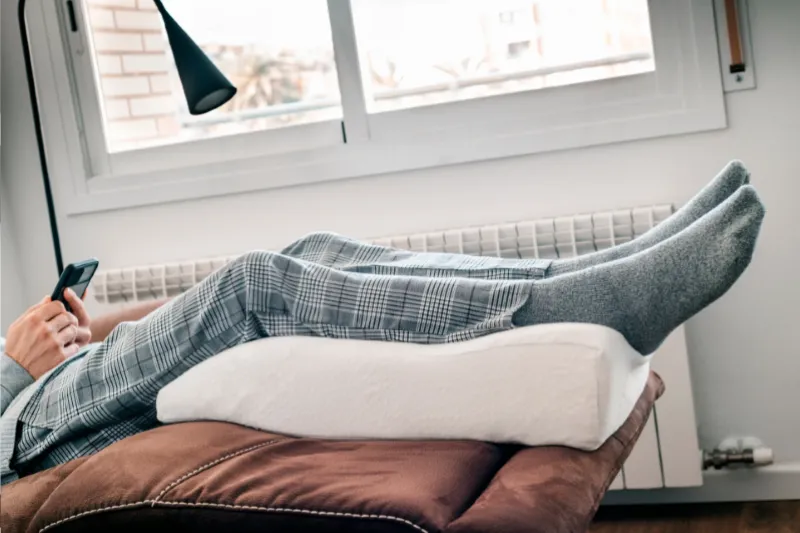
⏳ Whenever you rest, for the first few days
Elevating your leg prevents fluid accumulating at your foot, hence reducing swelling. Use pillows to raise your knee slightly higher than your heart when lying down. This small adjustment works best in the first 72 hours but can be continued whenever your knee feels heavy or puffy. However, if you feel numb, put your legs down.
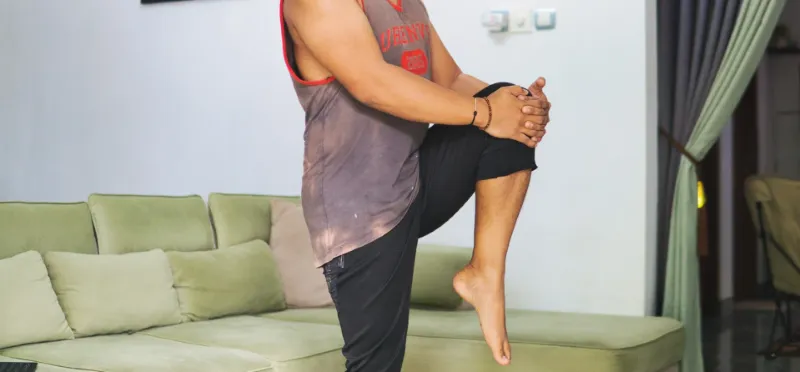
⏳ Start after 2–3 days if pain improves
Once the sharp pain begins to ease, movement is your friend. Gentle stretching and strengthening exercises keep your muscles active, improve circulation, and prevent stiffness.
When you’re ready, low-impact activities are especially helpful:
These exercises strengthen the muscles around your knee, so the joint carries less strain in the future.
(Educational info only, not medical advice.)
For short-term relief, some people use over-the-counter pain relievers like paracetamol or NSAIDs. They can help manage discomfort, especially in the early days. But medication should never replace proper recovery steps — and if pain continues, it’s a signal to look deeper.
(Educational info only, not medical advice.)
Most minor injuries improve in a few days. But there are red flags you should never ignore:
These signs suggest something more than a simple strain. And this is where many Malaysians turn to Google, hoping for clarity but Google isn’t a real doctor.
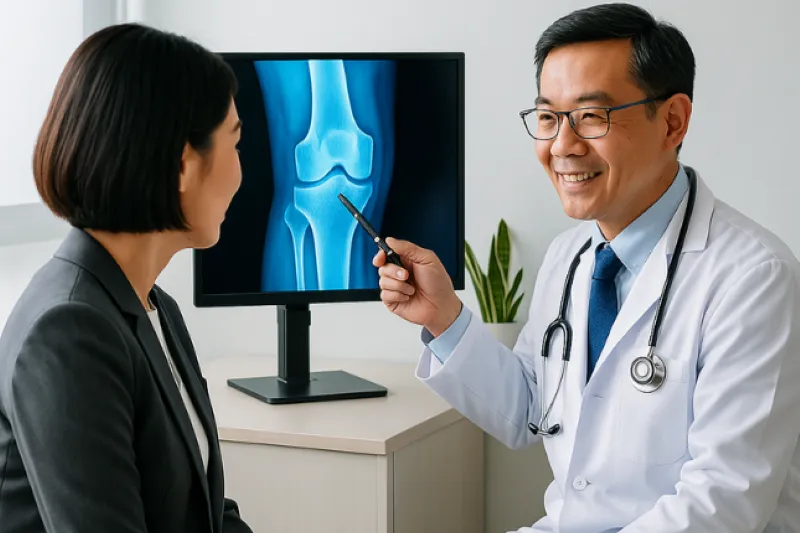
That’s why Pantai Hospital Ipoh created MoveEasy Screening - designed for busy Malaysians who just want answers, fast.
Here’s what happens in the session:
It’s simple, fast, and reassuring — giving you clarity without commitment.
 Click Here To Whatsapp Us
Book an appointment for a MoveEasy™ Session
.webp?sfvrsn=20763f7d_21)
.webp?sfvrsn=f2a2c343_12)



 +605-540 5555
 +605– 549 9911
 e-Shop
 请求预约
请求预约.webp)





 126, Jalan Tambun, 31400 Ipoh, Perak, Malaysia