

.webp)
Almost everyone gets a headache at some point. It may come after a stressful day, a poor night’s sleep, skipping meals, dehydration, or too much screen time. Most headaches are harmless and improve with rest, hydration, or simple pain relief.
But not all headaches are “just a headache.”
Sometimes, a headache can be your body’s warning signal that something more serious is happening. Knowing the difference between a common headache and one that needs medical attention can help you seek treatment early, and gain peace of mind.
As a neurosurgeon, I often meet patients who ask the same question:
“Doctor, how do I know if my headache is serious?”
This article will help you understand the common types of headaches, warning signs to watch for, and when it may be time to see a specialist.
Most headaches fall into a few common categories.
This is the classic “tight band around the head” headache.
You may feel:
These headaches are common in busy professionals, students, and anyone under stress.
Migraines can be disabling and often run in families.
Symptoms may include:
Many people think they have “sinus headaches” when they may actually be experiencing migraines.
Less common, but very painful.
Usually causes:
Patients often describe this as one of the worst pains they have ever felt.
This means the headache is caused by another underlying problem such as:
These are the headaches we especially want to identify early.
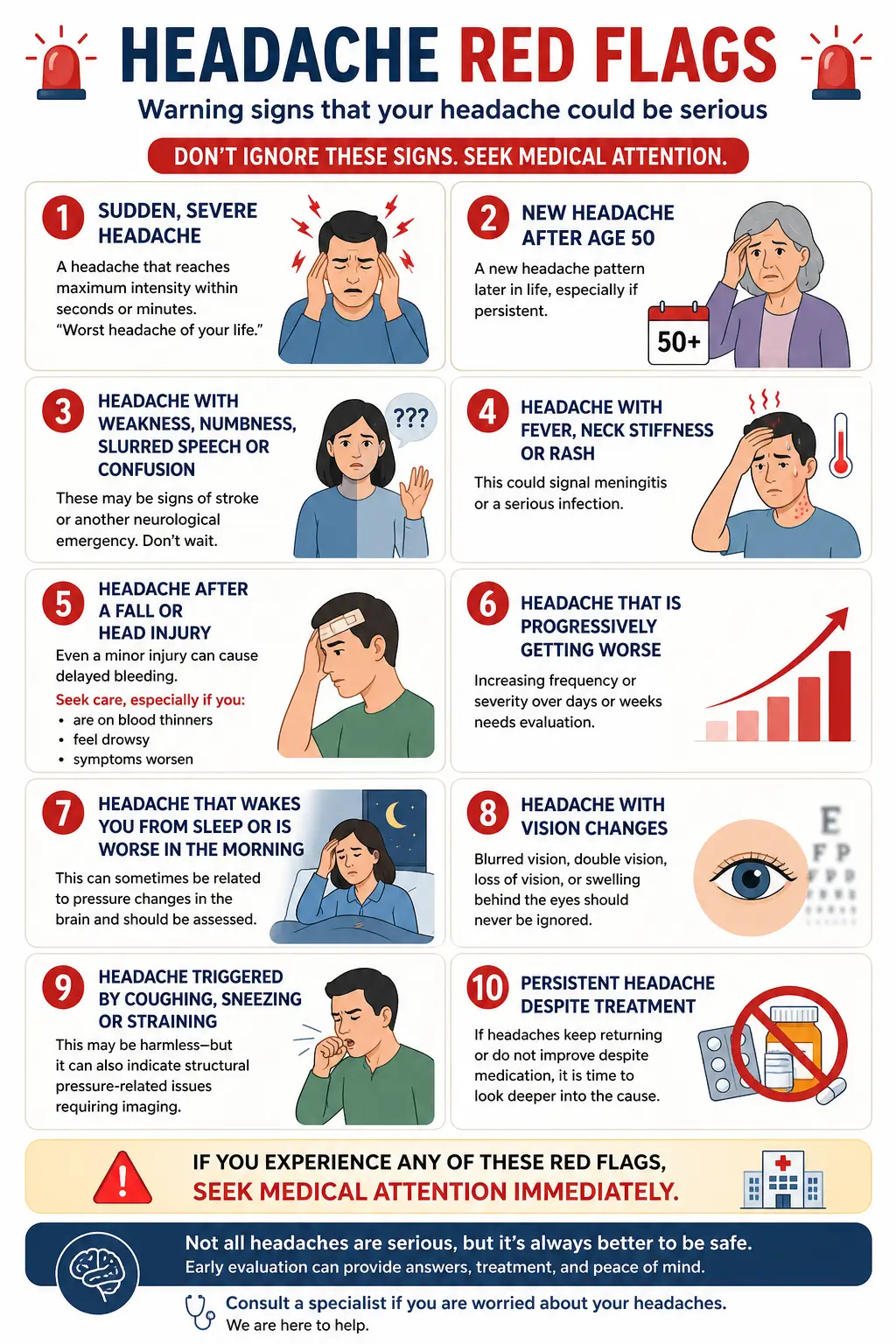
Doctors often look for “warning signs” that suggest a headache needs urgent assessment.
If you develop a headache that reaches maximum intensity within seconds or minutes, or what people will feel “like the worst headache of your life”, seek emergency care IMMEDIATELY.
This may indicate bleeding around the brain or another urgent condition.
A new headache pattern later in life deserves proper evaluation, especially if persistent.
These symptoms may suggest stroke or another neurological emergency. Do NOT wait.
This could signal meningitis or serious infection.
Even a seemingly minor knock can sometimes cause delayed bleeding.
Especially important if:
A headache that is increasing in frequency or severity over weeks should be checked.
We call this “early morning headaches” and can sometimes be related to pressure changes in the brain which should be assessed.
Blurred vision, double vision, loss of vision, or swelling behind the eyes should never be ignored.
This may be harmless—but it can also indicate structural pressure-related issues requiring imaging.
If headaches keep returning despite medication, it is time to look deeper into the cause.
You should consider seeing a doctor or neurosurgical specialist if:
Sometimes the most valuable treatment is not surgery—but an accurate diagnosis, reassurance, and a proper management plan.
Not always. Some serious conditions begin gradually.
Fortunately, brain tumours are not a common cause of headaches. But persistent or unusual headaches should still be evaluated.
Many headaches can be diagnosed through careful history and examination. Imaging is recommended only when clinically appropriate.
Helpful habits include:
Most headaches are common and manageable. But some headaches deserve urgent attention.
If your headache feels different, sudden, severe, persistent, or comes with neurological symptoms, it is wise to seek medical assessment early.
You know your body best. If something does not feel right, trust that instinct.
A detailed consultation can often identify the cause, guide treatment, and determine whether further tests such as brain imaging are needed.
If you have headaches that worry you—or headaches that are interfering with your quality of life—professional evaluation can provide both answers and reassurance.



 82, Jalan Tengah, Bayan Baru, 11900 Bayan Lepas, Penang, Malaysia


.webp?sfvrsn=20763f7d_21)
.webp?sfvrsn=f2a2c343_12)


 +604–643 8799
 e-Shop
 Minta temu janji
.webp?sfvrsn=276ce14_1/vector-(3).webp) Pesakit Antarabangsa
Pesakit Antarabangsa.webp)