

.webp)

Gout is not only a disease of the elderly. Although the risk of gout increases with advancing age, its occurrence in younger men has also been observed; In women, gout most commonly develops after menopause.
Genetic factors, increasing age, obesity and dietary habits are among the main risk factors for gout. People are advised to maintain healthy balanced diet and engage in regular physical activity.
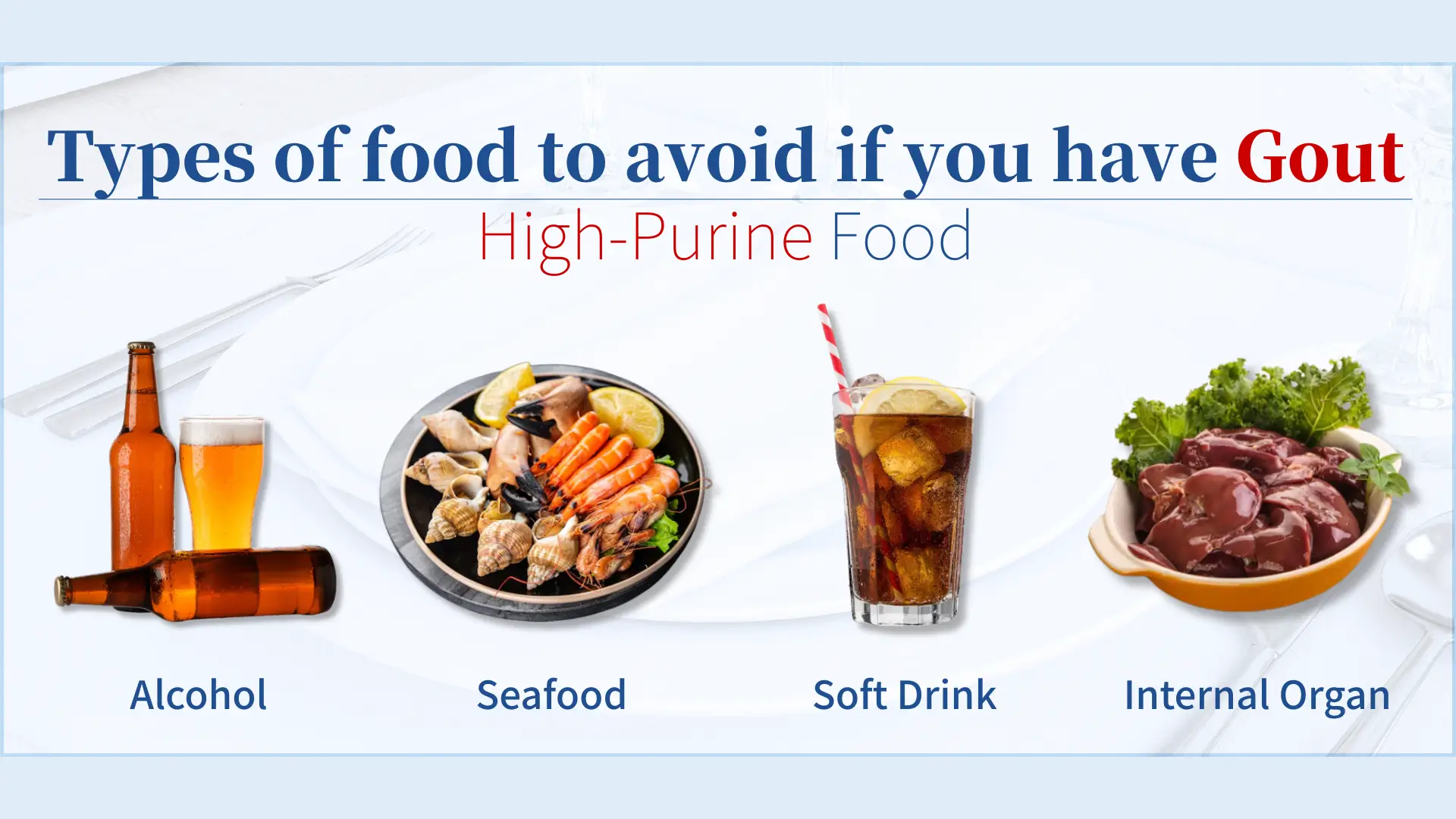
If one has been diagnosed with gouty arthritis, he/she should try to avoid foods high in purines,
such as seafood, internal organs, red meat, sugar-sweetened beverages, alcoholic beverages, etc.
In general, purines are metabolized into uric acid, which is then excreted mainly from the urine.
For patients with gout, high uric acid levels can form crystals that accumulate in the joints and trigger gout attacks.
Other chronic illnesses, such as diabetes, hypertension, or high cholesterol, are also common in patient with gout. It is hence of crucial importance to optimize the control of these conditions.
Additionally, be mindful of high-purine soup base or high-purine ingredients when enjoying hotpot, especially during the Chinese New Year festival, as it is also one of the major contributors to gout attacks.
Gout is different from other types of arthritis, such as Rheumatoid Arthritis. It is a specific type of arthritis caused by a crystal known as monosodium urate crystal.
During an acute gout attack, the pain comes on suddenly and usually reaches maximal pain in the first 24 hours. It typically attacks the joints at the base of big toe or mid foot. Even stepping can be very painful, making walking difficult. The affected joint is often seen red and swollen. The condition lasts no longer than 2 weeks.
In the early stage, gout typically affects only one joint. If poorly controlled, it may gradually involve multiple joints. In severe cases, tophi (crystal depositions) may form, around or outside the joints.
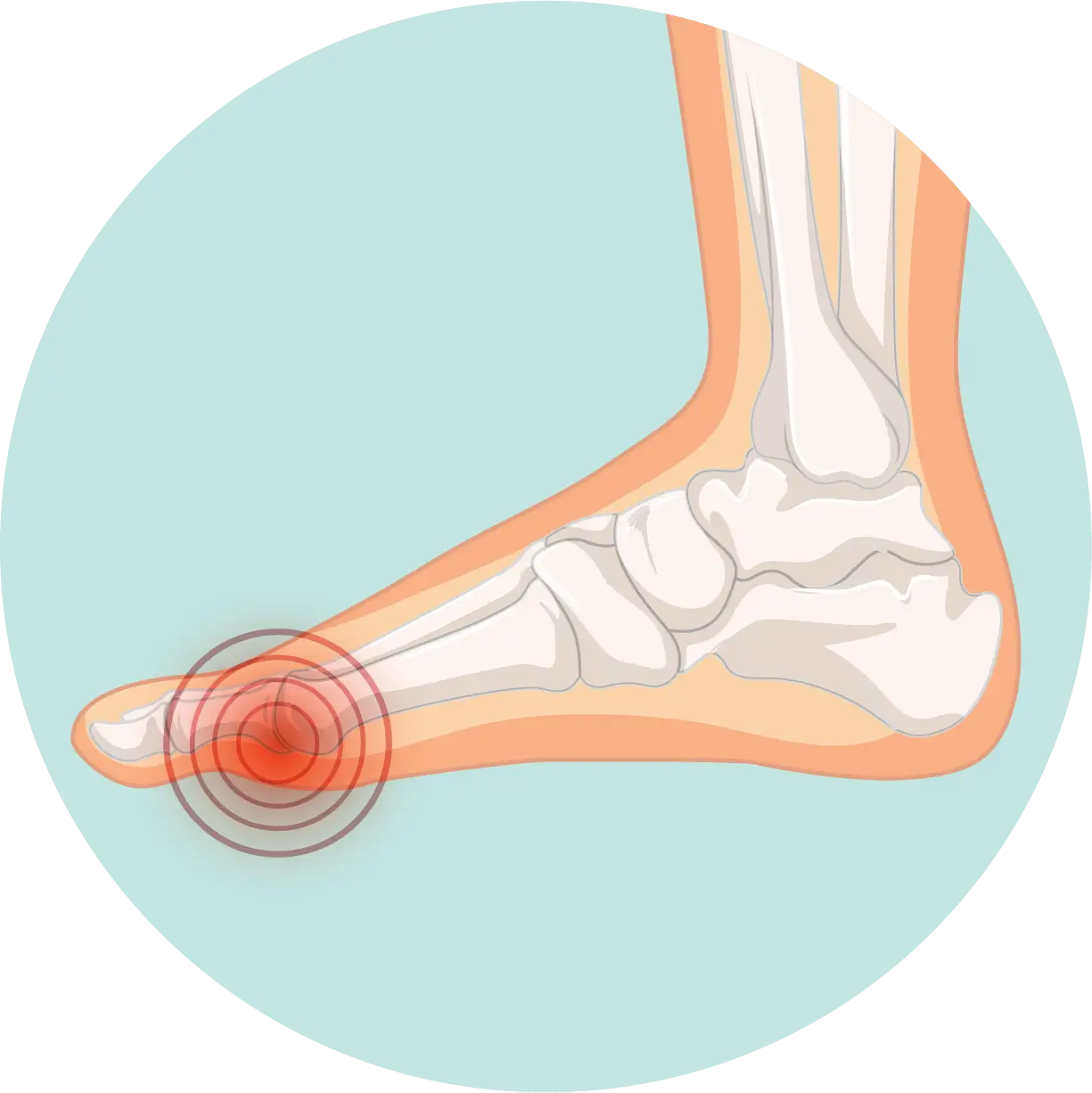
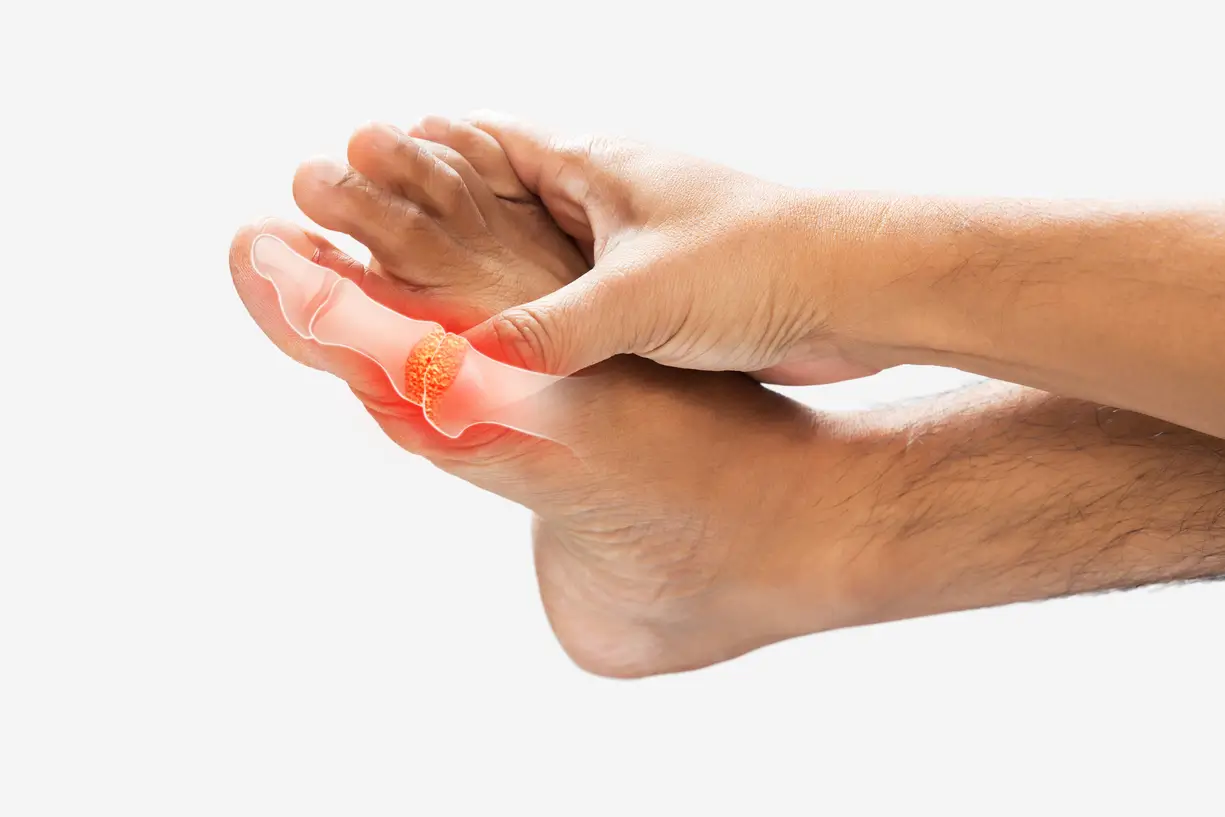
A gout attack usually occurs initially at the first metatarsophalangeal (MTP) joint.
Yes, gout can be treated.
Our main goals of treatment are to relieve pain and lower the level of uric acid in patients. Treatment options include oral medications and injections.
The choice of medication and injection site should always be decided by a doctor.
Some patients take painkillers without properly managing their uric acid levels, causing recurrent gout flares.
It is important to understand that hyperuricaemia, or a high uric acid level, does not necessarily mean gout. People with high uric acid levels but no symptoms (asymptomatic hyperuricaemia) usually do not need treatment.
Improper use of painkillers may even lead to other health problems, such as kidney damage or hormonal imbalance.
Therefore, the best way to manage gout is to consult your doctor and follow professional medical advice.
Gout begins with elevated uric acid levels; often asymptomatic.
Persistent hyperuricaemia leads to the deposition of monosodium urate (MSU) crystals in the joints, while patients may remain asymptomatic.
Over time, hyperuricaemia and MSU crystals can trigger a sudden episode of severe pain, known as an acute gout attack. It typically lasts about 1-2 weeks.
After an attack, the signs and symptoms of gout will disappear completely, then enters a quiet interval with no symptoms.
If gout is left untreated, the intervals between each attack will become shorter. Gout attack or recurrent flares may happen more frequently.
In the long run, gout can progress to the development of tophi and joint damage, which may ultimately affect mobility and quality of life.
The above article is contributed by Dr Ng Boon Han.
For more information, feel free to reach out to us on Facebook or call 04-442 8888.
KKLIU: 0649 / EXP 31.12.2028




 No. 1, Persiaran Cempaka, Bandar Amanjaya, 08000 Sungai Petani, Kedah, Malaysia


.webp?sfvrsn=20763f7d_21)
.webp?sfvrsn=f2a2c343_12)


 +604-442 9999
 e-Shop
 Request an Appointment
.webp)